Advent at Pleasant Hill
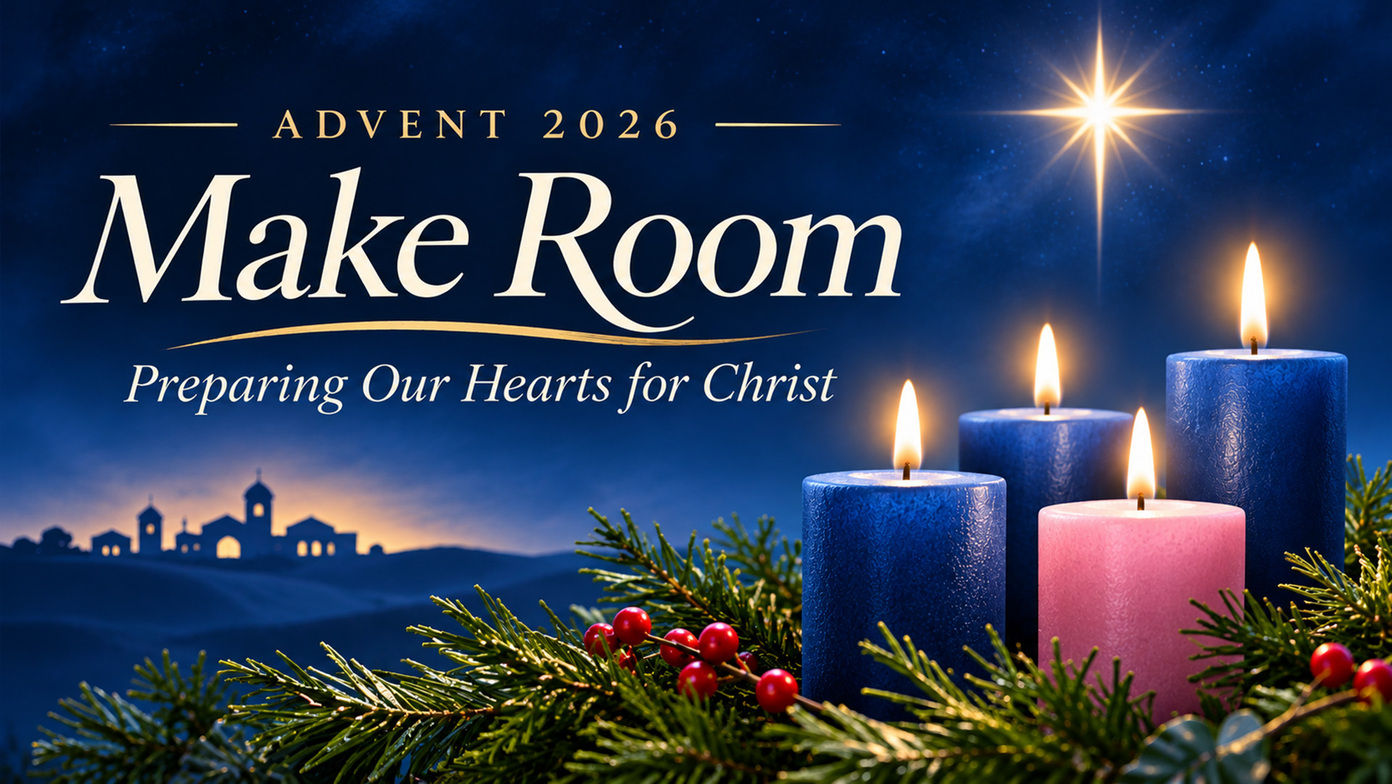
Advent is the four-week season that begins the Christian year and prepares us for the celebration of Christ’s birth. In the United Methodist tradition, it is a season of waiting, hope, reflection, and spiritual preparation as we remember Christ’s coming into the world and anticipate his return.
At Pleasant Hill, we observe what we call a progressive Advent. Rather than fully decorating our worship spaces at the beginning of the season, we intentionally allow the decorations to unfold throughout the four weeks of Advent. Just as we light an additional candle on the Advent wreath each Sunday, we add decorations to our Christmas tree and introduce additional figures to our nativity scene as the season progresses.
This gradual transformation of our worship spaces is intended to reflect the spiritual journey taking place within us. Rather than rushing to the celebration of Christmas, we allow ourselves to experience the waiting, anticipation, and growing expectation that are central to Advent. Each week brings us a little closer to the celebration of Christ’s birth while reminding us of the importance of preparing our hearts for his coming.
Hanging of the Greens
Our Advent journey begins with the Hanging of the Greens at both worship services. This tradition invites us to look beyond the beauty of the decorations and discover the deeper meaning of these familiar symbols. As we prepare our worship spaces, these visible reminders of God's promises and the story of our salvation help us prepare our hearts for the coming of Christ.
As each element is presented, we will hear a Scripture reading and join together in singing the first verse of a corresponding hymn from the Promised Coming or In Praise of Christ sections of the United Methodist Hymnal. Each symbol, Scripture reading, and hymn helps us reflect on a different aspect of God's redeeming love.
Cedar Branch | Jeremiah 23:5–6
The cedar, known for its strength and endurance, reminds us of God’s everlasting faithfulness. Through the prophet Jeremiah, God promises to raise up a righteous Branch from the line of David. The first verse of “Lo, How a Rose E’er Blooming” (UMH #216) echoes this promise through the image of a flower springing from Jesse’s lineage. Together, the Scripture and hymn point to Jesus as the fulfillment of God’s promise, bringing new life and hope into a world surrounded by darkness.
Evergreen Wreath | Isaiah 9:2, 6
The evergreen wreath, with its unbroken circle and enduring greenery, symbolizes God’s eternal love and the everlasting life offered through Christ. Isaiah proclaims that those walking in darkness have seen a great light. In singing the first verse of “I Want to Walk as a Child of the Light” (UMH #206), we respond to that proclamation by expressing our desire to follow Jesus, recognizing him as the light of our lives and inviting his light to shine within our hearts.
Mistletoe | Isaiah 61:1–3
Traditionally associated with peace and reconciliation, mistletoe reminds us of Christ’s mission to restore our relationships with God and one another. Isaiah describes the Lord’s Anointed as one who brings good news, binds up the brokenhearted, and proclaims freedom. The first verse of “Hail to the Lord’s Anointed” (UMH #203) celebrates this mission, proclaiming Christ’s coming to overcome oppression, set captives free, and establish justice and righteousness.
Holly and Ivy | Isaiah 53:1–6
The pointed leaves and red berries of the holly remind us of Christ’s crown of thorns and sacrificial blood, while the enduring greenery of the ivy symbolizes faithfulness and eternal life. Isaiah speaks of the suffering servant who would bear our sins. The first verse of “Of the Father’s Love Begotten” (UMH #184) identifies Christ as the eternal Son of God, the Alpha and Omega, who existed before creation. Together, the Scripture and hymn remind us that the child whose birth we anticipate is the eternal Christ who entered our world to accomplish our redemption.
As we adorn our worship spaces, may we remember that we are doing far more than decorating for Christmas. Each branch, wreath, leaf, and berry helps tell the story of God’s redeeming love. Through Scripture, song, and symbol, may we embrace this season of holy anticipation, intentionally making room in our hearts, our lives, and our world for Emmanuel, God with us.